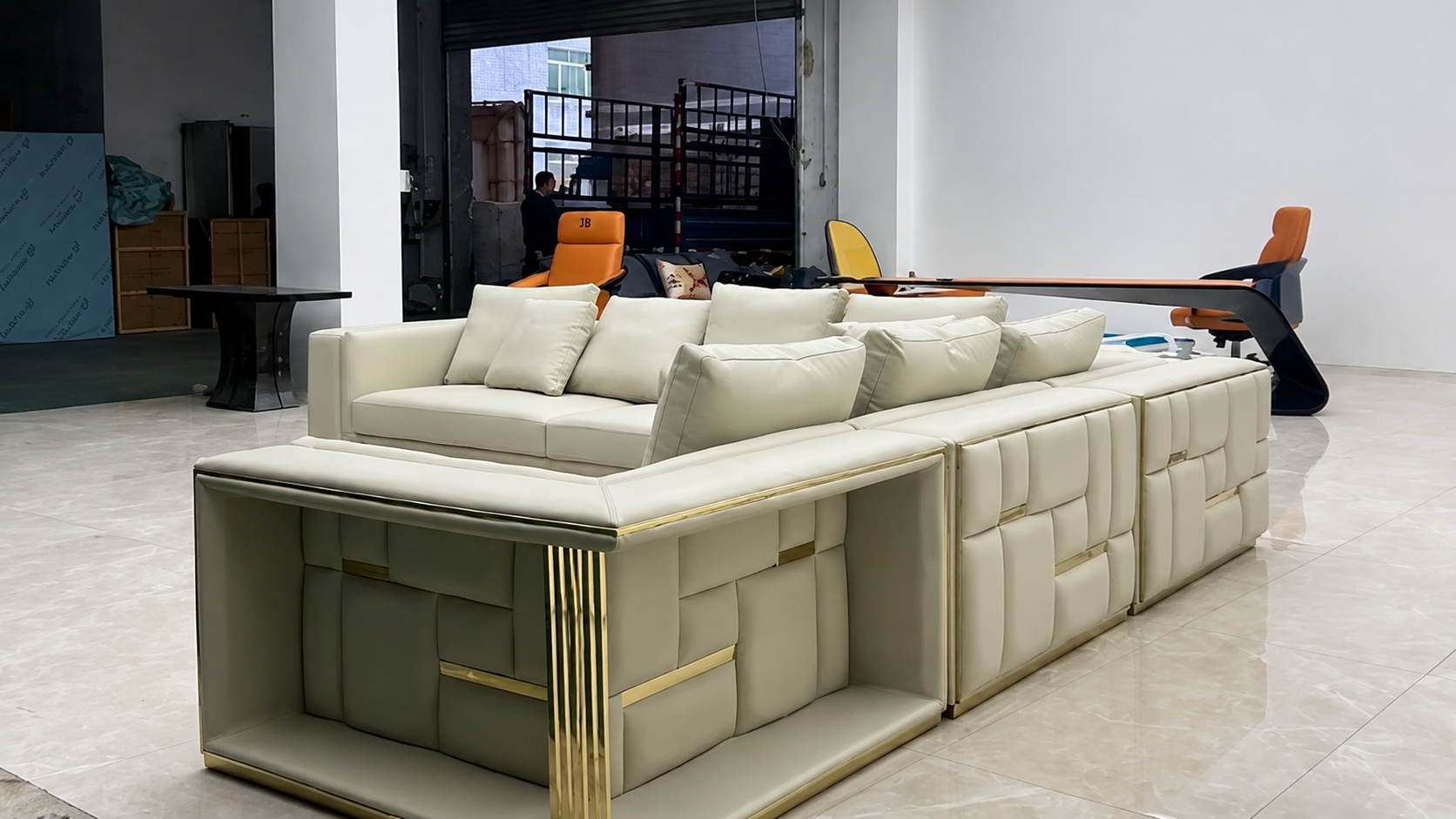
Choosing a reliable furniture supplier in China is one of the most important decisions in an international furniture sourcing project.
Many suppliers can provide attractive product photos and competitive prices. However, similar-looking furniture can differ significantly in materials, internal structure, workmanship, durability, packaging and overall quality.
Finding a reliable furniture supplier in China requires more than comparing prices and product photos.
For overseas buyers, the challenge is not simply finding a supplier. It is determining whether the supplier can produce the right furniture, maintain the confirmed quality, communicate clearly and complete the order according to the agreed requirements.
This guide explains how to evaluate furniture factories, showrooms and trading companies before placing an order in China.
Why Choosing a Reliable Furniture Supplier in China Matters
Furniture is different from many small consumer products. It is large, heavy and expensive to ship internationally. Returning defective furniture after delivery is usually difficult and costly.
A poor supplier choice can result in:
- Incorrect dimensions or colors
- Different materials from those confirmed
- Weak internal structures
- Delayed production
- Inconsistent quality
- Missing accessories
- Inadequate export packaging
- Communication problems
- Unexpected additional charges
A reliable supplier should provide more than a low price. The supplier should understand your requirements, explain the product specifications clearly and take responsibility for completing the order correctly.
1. Identify the Type of Supplier
Before comparing quotations, understand what type of supplier you are dealing with.
Furniture suppliers in China generally include factories, showrooms, wholesalers and trading companies.
Furniture Factory
A factory produces furniture directly. Working with a factory may offer better customization options, clearer production control and more competitive pricing for larger quantities.
However, some factories specialize in only one category, such as sofas, dining furniture, beds, cabinets or outdoor furniture. A factory may not be suitable for buyers purchasing many unrelated product categories.
Furniture Showroom
A showroom displays finished products and usually offers a wider selection of styles. Showrooms can be convenient for home, villa and project buyers who want to compare furniture in person.
Some showrooms own factories, while others cooperate with several manufacturers. Buyers should confirm who will actually produce the furniture.
Trading Company
A trading company sources products from different factories and manages communication, orders and export procedures.
A good trading company can be useful when an order includes several product categories. However, buyers should still understand which factory produces each product and how quality will be controlled.
There is no single supplier type that is always best. The correct choice depends on your quantities, product categories, customization requirements, quality level and project schedule.
2. Check Whether the Supplier Matches Your Project
A supplier may be reliable but still unsuitable for your specific project.
For example, a factory specializing in large hotel orders may not be interested in producing one customized sofa. A supplier focused on low-cost furniture may not be suitable for a premium villa project.
Before requesting a final quotation, confirm whether the supplier regularly handles projects similar to yours.
Ask about:
- Main product categories
- Typical order quantities
- Target price level
- Customization ability
- Export experience
- Production capacity
- Normal production lead time
- Previous residential or commercial projects
A suitable supplier should understand the expected quality level and be able to explain how your products will be manufactured.
3. Compare Specifications, Not Only Prices
One of the most common furniture sourcing mistakes is comparing quotations based only on the final price.
Two sofas may look almost identical in photos but use different frames, foam, fabrics and internal structures. Two dining tables may have similar designs but use different grades of stone, wood, metal or finishing.
Before comparing prices, make sure each quotation is based on the same specifications.
Important details may include:
- Overall dimensions
- Frame material
- Wood or panel type
- Foam density
- Fabric or leather grade
- Stone or tabletop material
- Metal thickness
- Hardware brand or quality
- Surface finish
- Packaging method
- Installation accessories
- Production lead time
A very low quotation may exclude important materials, packaging or services. Ask the supplier to provide a detailed description rather than accepting a quotation containing only a product image and total price.
4. Evaluate Communication Quality
Communication before payment often indicates how the supplier will perform after receiving the deposit.
A reliable furniture supplier should answer questions clearly and confirm important details in writing.
A reliable furniture supplier in China should confirm materials, dimensions, production time and packaging in writing.
Be cautious when a supplier:
- Avoids answering material questions
- Changes prices without explanation
- Provides inconsistent information
- Refuses to confirm dimensions
- Promises everything without checking
- Pressures you to pay immediately
- Does not record agreed changes
- Sends incomplete quotations
Furniture orders involve many details. Verbal promises can easily be forgotten or misunderstood. Important requirements should be recorded in the quotation, order sheet, drawing, invoice or written conversation.
Clear records are especially important for customized products.
5. Request Real Product Photos and Videos
Catalog images can help identify styles, but they may not represent the supplier’s actual production quality.
Ask for recent photos or videos showing:
- Finished products
- Product details
- Stitching and upholstery
- Drawers and hardware
- Internal sofa structures
- Factory production areas
- Packaging methods
- Completed project orders
- Warehouse or loading processes
For upholstered furniture, close-up photos can help you evaluate stitching, fabric alignment, cushions and finishing.
For cabinets and tables, request videos showing drawers, doors, joints, edges, surfaces and hardware operation.
Photos and videos cannot replace a complete inspection, but they can help identify obvious differences before an order is placed.
6. Confirm Customization Ability
Many international furniture projects require changes to dimensions, materials, colors or finishes.
Do not assume a supplier can customize a product simply because they say customization is available.
Provide clear reference information, including:
- Product drawings
- Required dimensions
- Reference photos
- Material preferences
- Fabric or leather selections
- Color references
- Quantity
- Intended use
- Packaging requirements
Ask the supplier to explain which parts can be changed and whether the modification affects price, structure or production time.
For complex custom furniture, an approved drawing or sample should be confirmed before mass production begins.
7. Review the Quotation Carefully
A professional furniture quotation should contain enough information to identify exactly what is being purchased.
Check whether the quotation includes:
- Product photo or model number
- Product description
- Dimensions
- Material
- Color or finish
- Quantity
- Unit price
- Total price
- Packaging
- Production time
- Payment terms
- Quotation validity
- Supplier company information
If a quotation is unclear, request a revised version before making payment.
Do not rely only on product names such as “luxury sofa,” “solid wood table” or “Italian-style bed.” These descriptions are too general to control production quality.
8. Understand Payment Terms
Payment terms should be discussed before confirming an order.
Before paying a deposit, buyers should verify that the reliable furniture supplier in China has experience with similar projects.
Furniture suppliers commonly require a deposit before production and the remaining balance before shipment. The exact arrangement may depend on the supplier, order size and level of customization.
Before paying, verify:
- The recipient account name
- The supplier’s company information
- The order specifications
- The total amount
- The deposit percentage
- The balance payment condition
- The expected production schedule
- The inspection arrangement
Be cautious if the bank account information changes unexpectedly or if payment is requested through an unrelated personal account without a clear explanation.
The order information and payment recipient should be checked carefully before funds are transferred.
9. Plan Quality Inspection Before Shipment
Even when a supplier appears reliable, the finished furniture should still be checked before shipment.
Inspection is not necessarily a sign of distrust. It is a normal step for confirming that the order matches the approved requirements.
A furniture inspection may include checking:
- Product model and quantity
- Dimensions
- Materials
- Colors and finishes
- Workmanship
- Stability
- Functional parts
- Accessories
- Labels
- Packaging
Problems found before shipment are usually easier to repair or replace. Once furniture has been loaded and shipped internationally, resolving quality issues becomes more complicated.
The inspection requirements should be discussed before the order is placed, not only after production is completed.
10. Check Export Packaging
Domestic furniture packaging may not be strong enough for international transportation.
During overseas shipping, furniture may be moved several times between the factory, warehouse, truck, container, port and final destination.
Ask the supplier how the furniture will be protected against:
- Scratches
- Impact
- Moisture
- Pressure
- Movement inside the packaging
- Damage to corners and edges
- Damage to glass, stone or fragile components
Depending on the product, packaging may include foam, corner protection, cartons, woven bags, wooden frames or wooden crates.
Fragile products such as marble tables, mirrors, glass furniture, lighting and decorative items may require stronger protection.
Good packaging cannot eliminate every transportation risk, but it can significantly reduce avoidable damage.
11. Be Careful With the Lowest Price
The lowest-priced supplier is not always the most economical option.
A lower price may be achieved by changing:
- Material grade
- Internal structure
- Foam quality
- Fabric quality
- Hardware
- Surface finishing
- Product dimensions
- Packaging
- Quality-control procedures
Instead of asking only, “Which supplier is cheapest?” ask, “Which supplier provides the best value for the required quality?”
The goal should be to find a supplier whose pricing, quality and production ability match your project.
Warning Signs to Watch For
Buyers should be cautious when a supplier:
- Refuses to provide detailed specifications
- Gives a price far below comparable quotations
- Changes company or bank information frequently
- Cannot explain where products are manufactured
- Uses only edited catalog images
- Avoids factory or video verification
- Promises an unrealistic production time
- Requires full payment before production without explanation
- Refuses to allow inspection
- Does not confirm packaging requirements
One warning sign does not always mean the supplier is unreliable. However, several warning signs together should be investigated before payment.
Should You Visit the Supplier in Person?
Visiting furniture markets, showrooms and factories can help buyers compare products more effectively.
During a visit, you can:
- Touch and test materials
- Sit on sofas and chairs
- Compare finishes
- Inspect sample products
- Discuss customization
- Meet the supplier directly
- Review packaging
- Understand factory capabilities
However, visiting China is not always necessary. Buyers can also manage projects remotely with clear specifications, supplier verification, video communication, production follow-up and pre-shipment inspection.
For large or complex first-time projects, visiting Foshan may make supplier selection faster and more reliable.
How a Local Furniture Sourcing Agent Can Help
International buyers may find it difficult to evaluate suppliers from overseas, especially when quotations come from several factories and include different specifications.
A local furniture sourcing agent can help:
- Identify suitable suppliers
- Compare quotations
- Verify product details
- Communicate in Chinese and English
- Arrange showroom and factory visits
- Negotiate prices
- Confirm customization requirements
- Follow production
- Coordinate quality inspection
- Consolidate orders
- Arrange shipping support
The sourcing agent should help the buyer understand the differences between suppliers rather than recommending products based only on price.
Final Checklist Before Choosing a Supplier
Before confirming a furniture supplier in China, check the following:
- Does the supplier specialize in the required product category?
- Has the supplier handled similar projects?
- Are the materials and dimensions clearly documented?
- Is the quotation complete?
- Is communication clear and consistent?
- Can the supplier provide real product or production evidence?
- Are customization details confirmed?
- Are payment terms reasonable?
- Is inspection allowed before shipment?
- Is export packaging included?
- Can the supplier meet the required schedule?
A supplier who answers these questions clearly is usually easier to work with throughout production and shipping.
Start Your Furniture Sourcing Project in China
Choosing a reliable furniture supplier in China requires more than searching for product photos and comparing prices.
Buyers should evaluate supplier suitability, materials, specifications, communication, production ability, payment terms, inspection arrangements and export packaging before placing an order.
KYLEFURN helps international buyers source furniture from Foshan and nearby manufacturing areas. We assist with supplier screening, quotation comparison, market and factory visits, customization communication, production follow-up, quality inspection, order consolidation and shipping coordination.
Send us your product photos, floor plans, room list, dimensions, quantities, budget and destination country or port. We will review your requirements and help you plan the next steps for your furniture sourcing project.