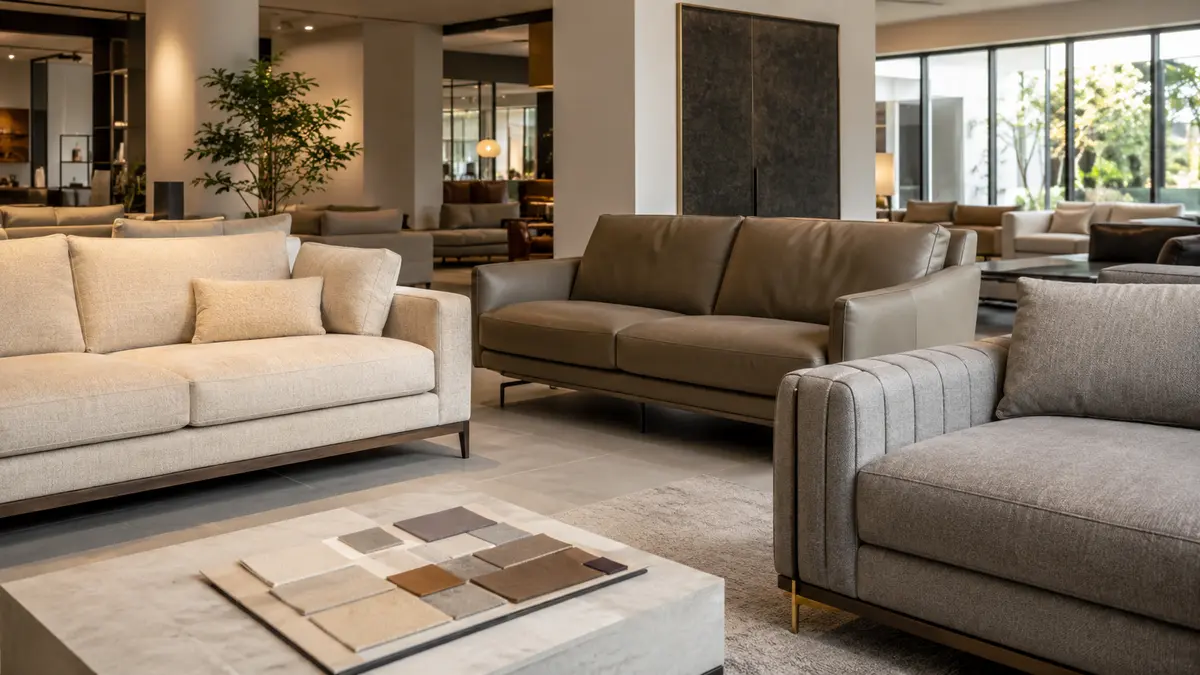
Buying a sofa from China gives homeowners, retailers, designers and project buyers access to many styles and customization options. However, two sofas can look almost identical in photos while using different frames, foam, upholstery, hardware and packaging. A low price is not useful if the product feels wrong or arrives damaged.
Before requesting quotations, turn reference images into a written specification. These nine checks will help you compare suppliers on the same basis and plan the order through international shipping.
1. Choose the Right Sofa Type
When sourcing a sofa from China, start with function. Decide whether you need a fixed sofa, modular sectional, recliner, sofa bed, curved sofa or living-room set, and whether it is for a home, retail collection, hotel or commercial project.
Stock and Showroom Models
Existing models can suit a sample or small order. Confirm availability, supplyable colors and whether the factory may substitute fabric, foam or hardware after the showroom sample is sold.
Customized Sofas
Customization may include dimensions, upholstery, foam firmness, leg finish, stitching and cushion configuration. Modifying an existing model is usually easier than developing a new frame. For full customization, provide drawings, dimensions and approved material samples.
2. Confirm Dimensions and Intended Use
Confirm overall width, depth and height, plus seat height, seat depth, arm width, back height and every modular section. Check doorways, elevators and corridors at the destination; a sofa that fits the floor plan may not fit through the building.
Use also changes the specification. A home sofa may prioritize softness, while a hotel, office or rental project may need stronger upholstery and easier maintenance. Tell the supplier the destination country and use case.
3. Compare Materials, Not Just Photos
Compare a sofa from China by construction and material specification, not only by shape. Ask each supplier to describe these components in writing.
Frame and Seat Support
Confirm the frame material, reinforcement, joint method and seat-support system. The structure may use solid wood, engineered wood, plywood, metal or a combination. Ask how metal parts are protected from corrosion.
Foam and Comfort
Ask for the foam density or grade in the seat, back and arms, and whether cushions use one or several layers. Density and firmness are different, so describe the required comfort and test a sample when possible. Confirm the filling used in loose cushions.
Upholstery and Stitching
Record the fabric or leather code, composition, color, surface treatment and relevant performance requirements. Review stitching, piping, seams, zipper placement and fabric tension. For batch production, confirm how color consistency will be controlled.
Hardware and Mechanisms
For recliners, sofa beds, adjustable headrests or storage modules, identify and test the mechanism. Confirm the power standard, included accessories and future replacement-part availability.
4. Understand What Changes the Price
The price of a sofa from China depends on frame construction, foam, upholstery grade, mechanism, quantity, customization and export packaging. Compare suppliers with one specification sheet so a lower quote does not hide a lower material grade.
Every quotation should clearly state:
- Model dimensions and the price of each module
- Frame, seat support, foam and cushion filling
- Fabric or leather code and the included upholstery grade
- Legs, hardware, mechanisms and loose accessories
- Export packaging and whether wooden protection is included
- Trade term, payment schedule, production time and quotation validity
Confirm whether the quotation is EXW, FOB, CIF or another trade term. The official ICC Incoterms rules explain how responsibilities and risk are divided. Compare unit prices only when the commercial scope is the same.
5. Confirm MOQ and Customization Limits
When buying a sofa from China, there is no universal MOQ. A stock model may be available as one piece, while production may require a minimum per model, color or fabric. A new frame or special material can require a higher quantity.
Ask these questions before approving a supplier:
- Is the MOQ calculated per model, per color or for the total order?
- Can different modules or upholstery colors be combined?
- Is a paid sample available, and can the sample cost be credited to the order?
- Are there surcharges for a small quantity or custom material?
- Can the same fabric or replacement parts be reordered later?
6. Evaluate the Supplier’s Real Capability
A large showroom is not proof of capability, and a factory does not suit every market. Ask who manufactures the sofa, which work is completed in-house, whether similar orders have been exported and how subcontractors are controlled.
Compare communication, specification accuracy, sample quality, capacity, lead time and after-sales support. For local help screening sofa manufacturers in China and comparing quotations, a Foshan furniture sourcing agent can organize the information into one clear comparison.
7. Approve a Written Specification Before the Deposit
Do not order from a product photo and chat history. Record the model, dimensions, frame, seat support, foam, cushion filling, upholstery code, color, stitching, legs, mechanism, quantity, price, packaging, lead time and inspection requirements.
Attach drawings, annotated photos and approved samples. Both buyer and supplier should confirm the same version before the deposit is paid.
If you plan to select products in person, a Foshan furniture market tour can help compare models while recording dimensions, materials and quotations.
8. Inspect Sofa Quality Before Shipping
Before a sofa from China leaves the factory or warehouse, inspect it against the approved specification. Check model, quantity, dimensions, color, stability, comfort, cushion recovery, seams, fabric tension, visible surfaces, mechanisms, accessories and labels.
Verify the finished packaging and document defects with photos and videos. Problems are easier to repair or repack before shipping. Use a consistent furniture quality inspection checklist so the supplier understands what must be corrected before release.
9. Plan Packing, CBM and International Shipping
Sofas are bulky, so use final packed dimensions, carton count and gross weight rather than showroom measurements. Calculate the total cubic volume before selecting a freight method.
Protect the Product Without Wasting Volume
Removable legs, detachable backs, knock-down structures or proven compression may reduce volume, but must not deform foam or damage upholstery. Confirm corner and moisture protection, carton strength and any wooden reinforcement.
Choose LCL or FCL After Packing Is Confirmed
LCL can suit a smaller shipment but needs strong export packaging. FCL can be practical for larger or consolidated orders. Choose by packed volume, destination, handling risk and current rates. Read the full guide to furniture shipping from China before requesting a final quote.
Consolidate Multi-Supplier Orders Carefully
For orders containing sofas and other furniture, use an agreed warehouse for quantity, label and packaging checks. Put supplier names, model numbers and buyer references on every package.
How KYLEFURN Supports Sofa Buyers in Foshan
KYLEFURN helps international buyers source sofas and other furniture from Foshan. Support can include supplier screening, quotation comparison, specification confirmation, production follow-up, inspection, consolidation and shipping coordination.
To buy sofas from China, prepare reference photos, dimensions, quantities, preferred materials, target market and destination country or port. Then send your furniture sourcing request so KYLEFURN can review the project and recommend the next steps.